
Matt Doll, Minnesota Environmental Partnership
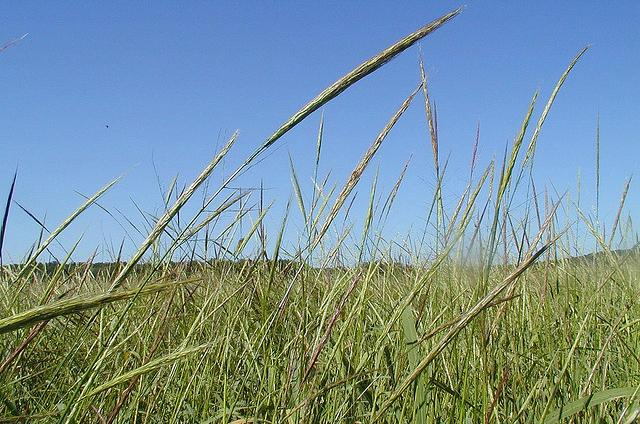
Wild rice is Minnesota’s official state grain, a vital and treaty-guaranteed resource for the Anishinaabe who live in the state, and, unfortunately, an increasingly rare plant to find in our waters. Despite a relatively good year for the naturally-occurring food source, wild rice is found in fewer and fewer areas. Due to its sensitivity to water quality, it acts as a canary in the coal mine for threats like climate change, sulfate pollution, and other threats.
The canary metaphor is fitting in this case, because part of what ails wild rice is mining pollution, specifically sulfate. A concentration of sulfate in the water above 10 parts per million is deadly to wild rice plants. It’s also dangerous in other ways: sulfate reacts with mercury on river and lake beds – a common problem in Northern Minnesota waters like the St. Louis River – to spread it into the food chain, poisoning invertebrates, fish, and the humans who consume them.
Seeing this threat to wild rice, the Legislature passed a law to do something about it back in 1973, setting a sulfate standard of 10 parts per million in wild rice waters. The law has thus been on the books for almost a third of Minnesota’s history as a state, but for most of that time, it was unenforced. Today, however, the Minnesota Pollution Control Agency (MPCA) is committed to implementing the law.
Naturally, mining companies are less than thrilled at the prospect of spending money to reduce their pollution. At one contentious mine, they’re trying to push the MPCA not to enforce the wild rice standard.
U.S. Steel’s Keetac Mine in Keewatin, on the boundary between St. Louis County and Itasca County, has become a focus for the MPCA’s efforts to enforce the rule. The MPCA is proposing to reissue Keetac’s wastewater permits for its mine and tailings basin with the wild rice standard included.
The permits the MPCA has proposed aren’t perfect, and we hope to see them improve. They don’t require Keetac to comply with the wild rice standard until 2030, they don’t adequately address groundwater pollution as required by state law, and they don’t require sufficient testing to protect aquatic life. But enforcing the wild rice standard at all is a big step in the right direction.
U.S. Steel, however, is pushing back. The company has requested that the MPCA grant Keetac a variance, or exemption, that would allow it to pollute above the standard, arguing that the standard is unscientific and too expensive to meet. The MPCA, to its credit, has proposed to deny that request, and is now collecting comments on its preliminary decision and on the permits.
U.S. Steel’s claims don’t hold water. The MPCA has conducted rigorous scientific studies that back up the sulfate standard as necessary to protect wild rice. And U.S. Steel, flush from its acquisition by Nippon Steel, does not lack for cash. Nippon Steel has pledged to invest $11 billion in U.S. Steel properties over the next three years – surely the company can afford to take real steps to comply with Minnesota law.
The MPCA will feel strong pressure from the mining industry and its supporters to fold on its decision – we need those of us who use and value clean water and wild rice to be pushing from the other side for stronger permits and in support of the agency’s decision to stick to the standard. If you care about protecting wild rice, aquatic ecosystems, and human health, you can comment online or participate at the MPCA’s informational meeting in Virginia this Wednesday evening, September 3.
Read More: Fact sheet and action tool from WaterLegacy