
Matt Doll, Minnesota Environmental Partnership
Government and tribal officials and local advocates recently celebrated a significant milestone in the restoration of the St. Louis River, the largest waterway to flow into Lake Superior. The complete cleanup of contaminated sediment in the Thomson Reservoir marks one of the most important steps forward in returning the Superior headwaters to being fishable, swimmable, and healthy for wildlife.
The St. Louis, which flows along the Fond du Lac Reservation and the cities of Cloquet, Duluth, and Superior, was one of the most polluted waters in the state not long ago. Decades of paper milling and mining introduced mercury, timber waste, dioxins, sewage, and more pollutants into the river, leaving the water quality deplorable and the fish unsafe for consumption.
“It wasn’t that long ago that residents were warned not even to swim in the St. Louis River, let alone eat the fish from it,” said Cristin Curwick, MEP’s Northeast Minnesota Organizer and a resident of Duluth. “Now, just yesterday, I was able to enjoy a perch we caught right near BoyScout Landing.”
That remarkable turnaround is the result of half a century of effort, and the work was boosted by the 1987 creation of 43 Areas of Concern (AOC) around the Great Lakes basin, sites which included the St. Louis River estuary. The St. Louis River AOC has a complex and fascinating history that can be found in a story map created by the Minnesota Pollution Control Agency and DNR.
Efforts to clean up the AOC were supercharged with the bipartisan establishment of the Great Lakes Restoration Initiative by Congress in 2010. The GLRI has invested billions in habitat restoration, infrastructure, and cleanup around the Great Lakes. It has restored the St. Louis River estuary to the benefit of the local economy and ecology alike – GLRI funding produces about three dollars in economic activity for every dollar spent. GLRI dollars paid for most of the Thomson Reservoir cleanup as well as sediment remediation in other parts of the river.
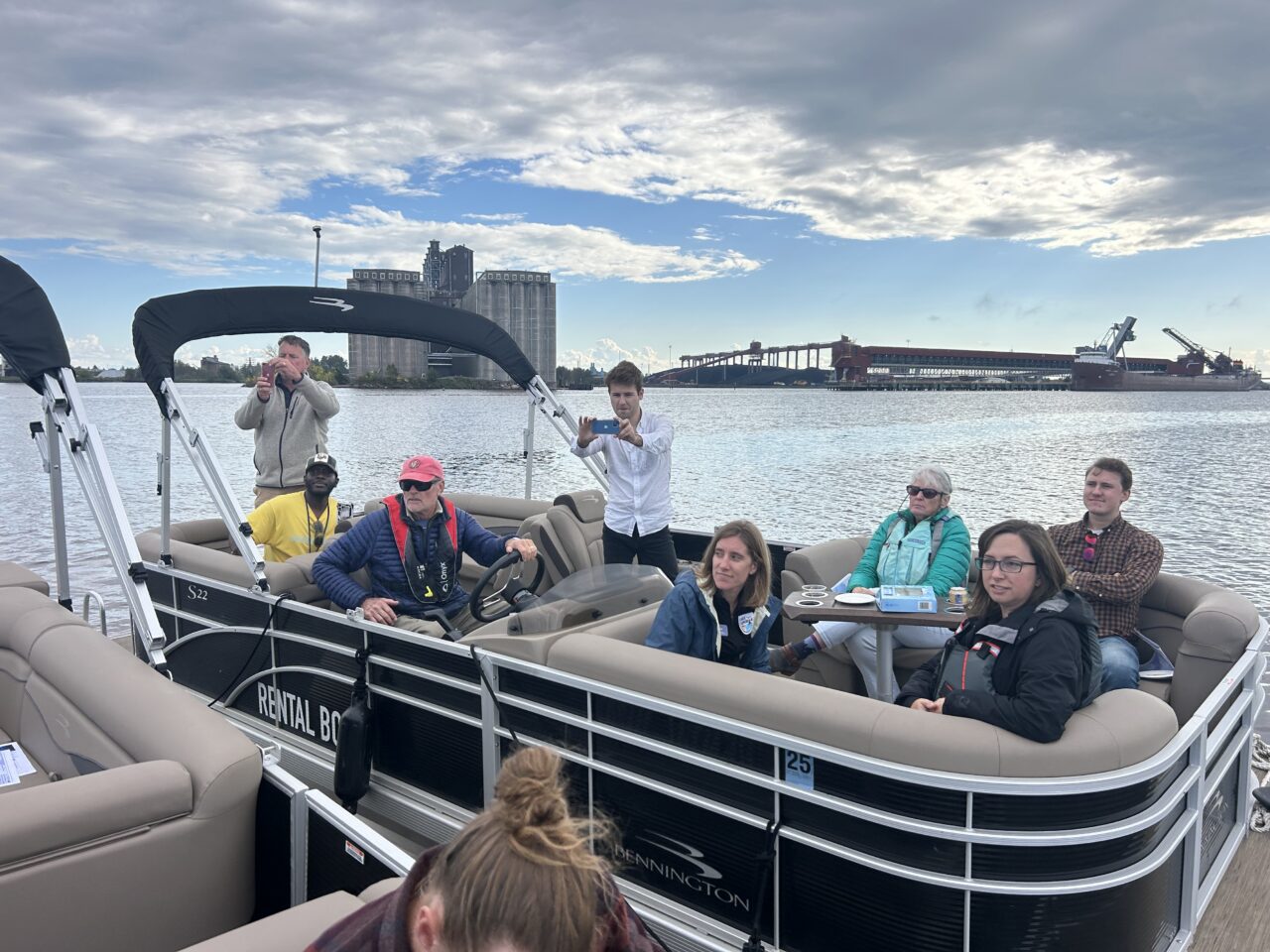
MEP has devoted much of our federal advocacy to protecting and enhancing the GLRI because we know that it works. We’ve shared stories of the GLRI’s impacts on the Twin Ports and upstream communities in our lobby visits to Washington. We’ve co-hosted restoration tours and youth fishing trips to highlight the benefits to local lawmakers and community members.
Our work isn’t just celebratory: we need policymakers to get the job done to restore this vital waterway. In 2020, we commissioned a report and produced a video on mercury in the St. Louis River watershed in an effort to get the MPCA to set a standard for the pollution that causes this toxic mercury to enter the foodchain. We noted that children and fetuses are especially at risk of long-term health conditions due to mercury from fish consumption. The MPCA has since taken some positive steps to address the mercury impact of taconite mining.
“There is still more to be done to ensure the river and estuary return to their former glory,” said Curwick. “For example, I am limited to one meal of fish per month from the St. Louis due to contaminants in the food chain.”
Still, the success of the Thomson Reservoir cleanup shows just how quickly and effectively the St. Louis River can be restored given proper funding and political will.