Matt Doll, Minnesota Environmental Partnership
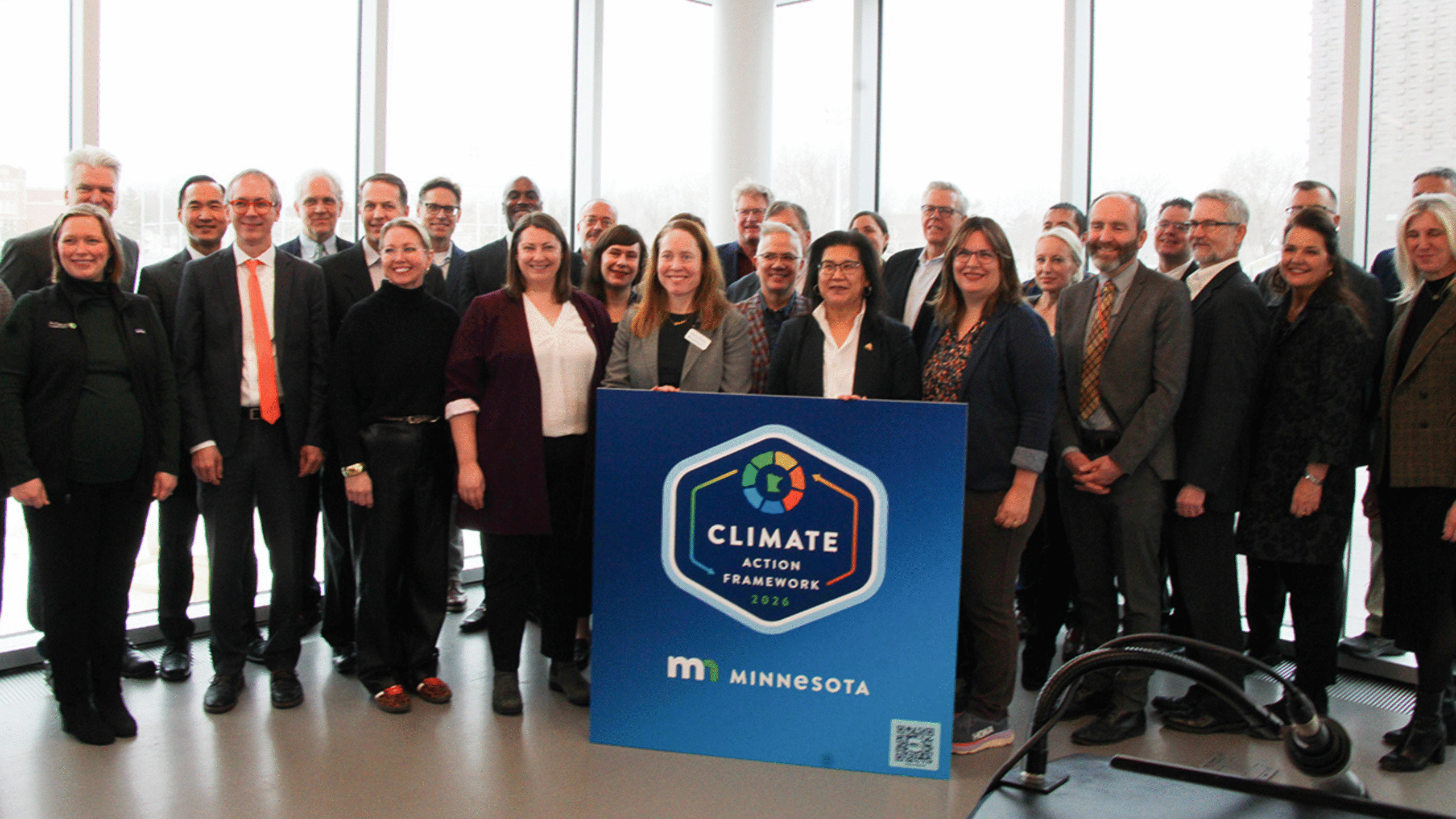
On February 11th, at Saint Paul’s North End Community Center, Minnesota state agency leaders unveiled the 2026 update to the state’s Climate Action Framework.
This framework serves as a guiding document for the state’s efforts to reduce planet-warming emissions. It includes actions that the state – including the executive branch agencies and the Legislature – should lead on, enact into law, or encourage.
The first version of the Framework was published in 2022 under a very different federal environment. Much federal funding for state and local climate projects has now been disrupted or cut. The EPA is seeking to abdicate its responsibility to regulate carbon emissions, though it faces opposition from groups like MEP member Environmental Law and Policy Center.
That federal failure makes Minnesota’s choices on climate in all major areas – transportation, agriculture, electricity, buildings, and industry – all the more critical to reduce the impacts of climate change.
MEP Executive Director Steve Morse joined State Climate Subcabinet leaders and other officials on February 11th at the launch of the updated Framework to show our support for this work. MEP has been among the organizations working to shape the Framework to be more effective from its inception. Morse was a member of the subgroup focusing on Natural and Working Lands. (View a full list of those who have provided input in conversation groups on pages 109-110 of the Climate Action Framework.) Many other Minnesotans provided input electronically.
Among the perspectives that MEP provided were three main points. First, the Framework should include clear and robust metrics for success. Second, the Framework should include a focus on continuous living cover crops, which improve soil health and water quality and can help reduce nitrous oxide emissions, in the natural and working lands section. Third, the Framework should include a special focus on peatlands, an extremely carbon-rich Minnesota resource that could be a powerful tool for climate action if restored and protected or an equally harmful threat if allowed to release stored carbon.
We’re encouraged that the 2026 update made progress on all three points. MEP and our members are still analyzing the update and the Action Steps document, but we are encouraged by much of what we have seen so far.
But making a cohesive plan is only one early and critical step. We can’t afford further delays. As Minnesota’s smoky summers and disturbingly rainy winters are showing, climate change isn’t in the future – it’s here. Now, we need accountability from state agencies, the Legislature, and other public and private entities to ensure this Framework turns into climate action.