
Matt Doll, Minnesota Environmental Partnership
Earlier this week, world leaders and delegations congregated in Belém, Brazil at the COP30 conference to discuss the world’s most critical health and security issue: the warming of our global climate. Conspicuously absent: an official delegation from the U.S. federal government, which has pulled back significantly from climate leadership under the second Trump Administration.
Individual Americans and organizations, however, are still attending, including MEP member Fresh Energy and other groups dedicated to solving the crisis. COP30 is a chance to share some of the successes that Minnesota has made in developing a cleaner economy with our international counterparts.
Climate change is perhaps more visible in Minnesota than it is in some other states – witness the mid-sixties temps in mid-November across the southern part of the state. The Star Tribune published an excellent explainer on how Minnesotans are witnessing these changes, including heavier snow, harsher rainstorms, and seasons of off-and-on wildfire smoke.
Minnesota has made significant – though insufficient – progress in cutting climate pollution. A recent state report on greenhouse gas reductions shows that we cut those emissions by about 14% between 2005 and 2022. That’s a step, but it’s not the kind of trajectory that will allow us to cut emissions in half by 2030 per the state’s goal.
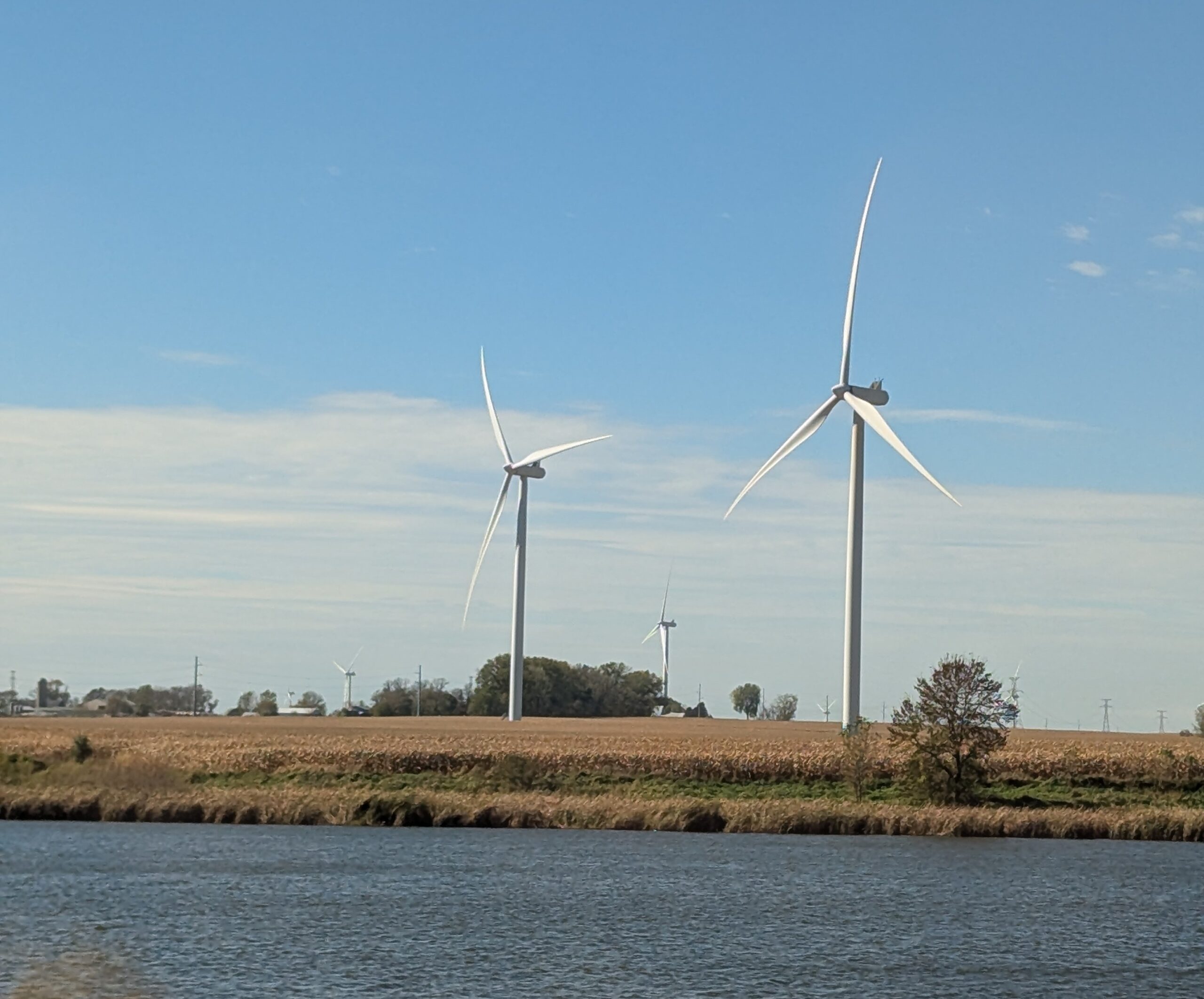
Our biggest success story is electricity. We’ve cut emissions from that sector in half since 2005, and we’ve passed a requirement to generate 100% of our electricity from carbon-free sources by 2040. There have been some attempts to weaken that law by counting sources that do produce carbon – like burning wood waste or garbage – as carbon-free, and MEP members have spoken out against these proposals. At this point, with wind, solar, and battery storage becoming ever more efficient and affordable, the main question mark in our electricity efforts is the rise of large data centers, which consume vast quantities of our energy.
Agriculture is a much larger and much trickier sector to decarbonize, and its emissions in Minnesota have risen about 1% since 2005. As we wrote earlier this month, the state government is currently in the process of updating its Climate Action Framework, the guiding document for state policies to confront the climate crisis. There’s a lot to like in the update, but MEP shared some constructive criticism, especially on the agriculture sector, in a letter to the state.
Our coalition would like to see clear and ambitious metrics for success in each of the action areas in the Framework, especially in the Agriculture section. We also hope to see an increased focus on continuous living cover (CLC) crops, which provide income to farmers while promoting clean water, emissions reductions, and climate resilience. And we’re advocating for much stronger action to restore Minnesota’s partially drained peatlands, a big carbon threat that could become a big carbon storage resource.
Transportation continues to be the largest source of greenhouse gases in Minnesota, and its emissions have only fallen by about 6% since 2005. It’s a challenging issue to tackle, especially given that Minnesota has one of the top five longest road networks in the country, despite being 22nd in population. But policies that reduce the total vehicle miles Minnesotans travel, like investing in public transit and developing greater housing density in cities, can help immensely. Increasingly popular and effective electric vehicles are another big part of the solution.
The way we heat our homes and businesses is a glaring area where Minnesota has failed to keep emissions in check, with residential and commercial emissions rising 38% and 48%, respectively. But technology is catching up, with heat pumps that can keep up with our winters now on the market and geothermal technology becoming more common. These emissions can be eliminated with the right policies and investments, and groups like Clean Heat Minnesota and the Minnesota Efficient Builders Coalition are on the job.
In the grand scheme of global emissions, Minnesota’s actions as a state will only directly move the needle by a slight fraction of what’s needed (though restoring our vast acres of peatlands could have an outsized positive impact). But every emissions reduction matters, and by demonstrating what works, we can be a key example for other states and countries. Minnesota is already a pioneer when it comes to regenerative agriculture, and we can share our successes far and wide. We can demonstrate how a state highly reliant on individual cars can slash transportation pollution. We can heat our cold state without leaking methane into the atmosphere. Much of this work is already underway.
The U.S. may not be attending COP30, but Minnesota moves ahead, thanks to good policies and the many organizations and people who have worked so hard to build them.